
Welcome to the Superhero Smash Universe!
Original Audio Issue Air Date
- July 29th, 2026
Listen to the Professor Henningsen Audio Issue
Part 1: The Guest Star (Begins @ 11:00 a.m.)
Super Origin ID: Superhero Smash (0:30)
- Good morning, listeners! You’ve waited all week, and it’s finally here: Another great audio issue of Superhero Smash on WIUP FM 90.1.
- Welcome to the Superhero Smash Universe where comics, music, and good deeds collide.
- I’m your host, Doctor Smash!
- Superhero Smash is a musical force for good!
- Let’s crack open this week’s issue.
Issue Theme
- Superhero Stories
Heroic Spotlight: Professor Henningsen Returns! (2:00)
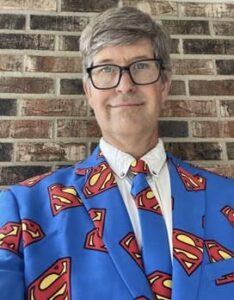
- He’s slower than a speeding bullet
- And less powerful than a locomotive
- And he definitely can’t leap buildings in a single bound
- But, he does know a ton about communication theory and superheroes
- Today’s special guest is Dr. David Henningsen
- He is a Professor in the Department of Communication at Northern Illinois University
- Dr. Henningsen is also a member of the Legion of Superhero Smash Listeners!
- I’ve known Professor Henningsen since we were college freshmen at the University of Wisconsin – Madison many years ago
- There was a comic book store in Madison called Capital City Comics
- In those days, it wasn’t cool like it is now to be a fan of superheroes, so we used a code for Capital City Comics. We called it, “The Shop.” And we would head there with our other friend, Steve Holland, who is now an attorney in Milwaukee, Wisconsin. We would spend ages digging through the back issue bins at Capital City Comics. The back issues were only 50 cents in those days, and I picked up a ton of old Avengers comics.
- Those were the days.
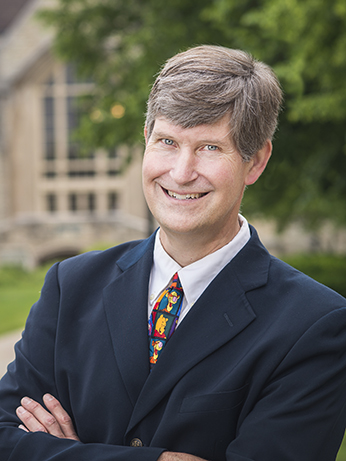
- You might say, we were living in a World of Superheroes, like in this next song by Kirby Krackle
Heroic Opening Song (2:58)
- “I Wanna Live in a World Full of Heroes” by Kirby Krackle
The Superhero Smash Back Issue Bin! (1:00)
- Speaking of back issue bins, Legion of Superhero Smash Listeners will recall that I’ve interviewed Professor Henningsen before.
- Back Issue Bin: Season II
- Audio Issue #31: Superteam Leaders and Superhero Smash Special Guest Star Dr. David Henningsen (8/15/24)
- This action-packed audio episode features Dr. Henningsen talking about how best to lead a team of superheroes!
- Audio Issue #31: Superteam Leaders and Superhero Smash Special Guest Star Dr. David Henningsen (8/15/24)
- Back Issue Bin: Season III
- Audio Issue #48: Secret Identities with Special Guest Star Dr. David Henningsen (8/13/25)
- In this action-packed audio episode, Superhero Smash uncovers secret identities!
- Audio Issue #48: Secret Identities with Special Guest Star Dr. David Henningsen (8/13/25)
Here Come the Superhero Stories! (1:00)
- Today, Professor Henningsen will be talking about storytelling in the world of superheroes, and how that works to shape bonds among group members.
- He’ll be talking about stories from Batman, the Guardians of the Galaxy, Spider-Man, and the Fantastic Four
- So I thought this would be a great opportunity to share some superhero story songs on Superhero Smash
- Since Professor Henningsen is going to start off by talking about Batman, though, we better get right into that famous theme song
Superhero Song 1 (1:11)
- “Batman T.V. Theme” from Sci-Fi’s Greatest Hits Vol. 4: Defenders of Justice

Doctor Smash & Professor Henningsen’s College Days (3:00)
The World of 1985
What was the world like when Dave and I were going to college?
- “The future is going to be amazing”
- Technology felt exciting rather than threatening. Personal computers were becoming more common, Nintendo was arriving, and movies like Back to the Future celebrated the idea that the future would be fun and full of possibilities.
- Success was celebrated
- The 1980s are often remembered as the decade of ambition. Popular culture emphasized achievement, competition, and making something of yourself. Many college students expected that if they worked hard, a good career and a house were realistic goals.
- There was still anxiety
- People worried about nuclear war, especially those of us who grew up during the Cold War. The Soviet Union was still America’s rival, and students had lived through years of hearing about missiles and geopolitical tensions. Mikhail Gorbachev’s rise brought some hope, but nobody knew how the story would end.
-
Pop culture was unusually upbeat
-
A lot of the music was energetic and optimistic. Think Phil Collins, Whitney Houston, Madonna, Bruce Springsteen, Journey, and the huge collective spirit behind “We Are the World.” Even charitable efforts like Live Aid had a sense that people could come together and make a difference.
-
- Looking back from 2026
- One of the biggest differences is that most students in 1985 were not carrying around constant news, social media, and smartphones. News traveled more slowly. You could actually disappear into college life for a few hours without the world reaching into your pocket every five minutes.
- Comic Books
- For comic book fans, the Crisis on Infinite Earths began during 1985, completely reshaping DC Comics and influencing superhero storytelling for decades afterward.
- The world had problems, but a lot of people still believed tomorrow would be better than today.
-
When Dave and started college in 1985, Tina Turner was asking, “What do we do with our lives?” Forty years later, superheroes are still helping us answer that question.
Superhero Song 2 (6:10)
-
“We Don’t Need Another Hero” by Tina Turner from the Mad Max Beyond Thunderdome soundtrack
Part 1: The Guest Star (Ends @ 17 minutes)
Part 2: Guest Star Interview 1 (Begins @ 17 minutes)
Super Mission ID: Superhero Smash (0:30)
- You’re listening to Superhero Smash on WIUP FM 90.1.
- Featuring the best music, stories, and comic book lore from every superhero universe.
- Superhero Smash is a musical force for good!
Superhero Smash Guest Star: Professor Henningsen Interview Introduction (1:00)
- Now, like all great superheroes, Professor Henningsen needs a theme song to introduce him
- And, since he’s going to be talking about Batman: The Animated Series, I figured that’s the place to start
- Here’s the theme by Danny Elfman who also did the soundtrack for the original Batman movie starring Micheal Keaton that came out in 1989
- Elfman has composed over 100 film scores, but his sound for Batman is iconic
Superhero Song 3 (1:02)
-
“Batman: The Animated Series (Main Title)” by Danny Elfman
- Starring Kevin Conroy
Superhero Smash Guest Star: Professor Henningsen Interview Part 1 (5:34)
- Elman has exactly the right blend of darkness, the gothic, and the heroic to transport us to Gotham City, home of the Caped Crusader
- Time to have Professor Henningsen don his own cape, to tell us all about the power of superhero storytelling
Superhero Song 4 (6:14)
- “Batdance” by Prince
Batman in the 1989 (1:00)
- As I mentioned, Professor Henningsen and I met in college in 1985
- Since we both loved superheroes, you can imagine our excitement when Batman premiered in 1989, the year we graduated
- Professor Henningsen and I waited in line outside The Orpheum theater on State Street in Madison, Wisconsin, to watch the movie
- Before the show, a man in a Penguin costume strode out and tossed flyers at us, to help pump up the crowd
- Then the lights dimmed and the crowd heard the opening bars of Elfman’s theme song
Superhero Song 5 (2:38)
- “The Batman Theme” by Danny Elfman from Batman Original Motion Picture Score
The Rise of the Dark Knight (3:00)
-
In the summer of 1989, Batman wasn’t just another movie. It was an event. Months before the release, the black-and-gold bat symbol appeared on T-shirts, posters, and hats everywhere. People debated Michael Keaton’s casting, lined up to buy tickets, and packed theaters to see whether a comic book hero could be taken seriously on the big screen. When the lights went down and Danny Elfman’s dramatic score filled the theater, audiences were introduced to a Gotham City unlike anything they had seen before: dark, mysterious, dangerous, and larger than life. For many fans, this wasn’t just a Batman movie. It was the moment superheroes grew up.
-
Looking back today, it’s hard to overstate the excitement. Before Batman, superhero films were relatively rare, and most people still associated Batman with the colorful, campy 1960s television show. Tim Burton’s film changed that perception overnight. Michael Keaton’s brooding Dark Knight, Jack Nicholson’s unforgettable Joker, Prince’s music, and Elfman’s iconic theme created a cultural phenomenon that dominated the summer of 1989. The movie’s success helped prove that comic book characters could anchor major blockbuster films, paving the way for the superhero movie era we live in today. When audiences left theaters that summer, it felt as though Batman had stepped out of the comic books and become a cultural force once again.
- Frank Miller’s The Dark Knight Returns came out in 1986, three years before Michael Keaton’s Batman movie arrived in 1989. The four-issue miniseries presented an older, darker, more psychologically complex Batman and helped convince both comics readers and Hollywood that the character could be more than the campy version many people remembered from television. Many fans and historians view The Dark Knight Returns as a major influence on the tone of Tim Burton’s film, and some commentators have argued that its success helped demonstrate that Batman could appeal to teenagers and adults as well as children.
-
By the time Burton’s Batman hit theaters in 1989, audiences were ready for a Gotham City filled with shadows, danger, and mystery. In many ways, the comic lit the Bat-Signal that guided Batman back into the cultural spotlight.
- Adding to that spotlight was the music Prince wrote for the movie, which added to Batman’s cool factor
Part 2: Guest Star Interview 1 (Ends @ 38 minutes)
Part 3: Guest Star Interview 2 (Begins @ 38 minutes)
Super Community ID: Superhero Smash (0:30)
- You’re listening to Superhero Smash on WIUP FM 90.1.
- Smash the big button at pagnucci.org to enter the Superhero Smash Universe and join Doctor Smash’s Legion of Listeners!
- Superhero Smash is a musical force for good!
Superhero Smash Guest Star: Professor Henningsen Interview Part 2 (6:21)
- Symbolic Convergence
Superhero Song 5 (2:19)
- “Cherry Bomb” by The Runaways
Super Mission ID: Superhero Smash (0:30)
- You’re listening to Superhero Smash on WIUP FM 90.1.
- Featuring the best music, stories, and comic book lore from every superhero universe.
- Superhero Smash is a musical force for good!
The Superhero Smash Comic Book Vault: First Appearance of Spider-Man (1:00)
- The Comic Book Vault Sound Effect (1:00)
- Batman #25o “The Batman Nobody Knows”

- Publication Date: July, 1973
- Publisher: DC Comics
- Cover Artist: Dick Giordano
- Writers: Frank Robbins and Elliot S! Maggin
- Penciler: Irv Novick
- Iconic cover with a hooded executioner waiting to chop Batman when he swings through an open door to rescue a bound damsel in distress
- The issue features campfire stories told about Batman when Bruce Wayne takes a bunch of kids on a camping trip
- Value on eBay today: Only $15. A real bargain for such a classic!
Part 3: Guest Star Interview 2 (Ends @ 35 minutes)
Part 4: The Good Deed (Begins @ 35 minutes)
Super Community ID: Superhero Smash (0:30)
- You’re listening to Superhero Smash on WIUP FM 90.1.
- Smash the big button at pagnucci.org to enter the Superhero Smash Universe and join Doctor Smash’s Legion of Listeners!
- Superhero Smash is a musical force for good!
Super Good Deed for the Week! (2:00)
This week on Superhero Smash, we talked about how comic book fans connect through stories. In Batman comics, people sit around sharing tales about the Dark Knight, each one offering a different perspective about who Batman really is. Communication scholars call this symbolic convergence, the idea that sharing stories helps people discover what they have in common and builds stronger communities.
This Week’s Superhero Smash Move: Share a Story That Brings People Together
- Tell a family story you’ve never shared before.
- Ask a friend or coworker about an experience that shaped them.
- Listen carefully when someone tells a story instead of planning your response.
- Help someone feel included by inviting them to share their own story.
Be like Batman’s Storytellers
The stories we share help us understand ourselves and one another.
By sharing a story and listening to someone else’s, you might discover that you have more in common than you ever imagined. That’s how communities are built, one story at a time.
Super good deed!
Superhero Smash Guest Star: Dr. David Henningsen Interview Part 3 (5:20)
- One Punch Battle: DC vs. Marvel
Part 4: The Good Deed (Ends @ 54 minutes)
Part 5: To Be Continued… (Begins @ 54 minutes)
Super Legacy ID: Superhero Smash (0:30)
- If you are enjoying today’s show, you can catch more Superhero Smash on Thursday mornings at 11:00 a.m. all summer long on WIUP FM 90.1.
- Superhero Smash is a musical force for good!
The Last Panel (2:00)
It’s time for the Last Panel of this week’s audio issue.
Comic books remind us that heroes don’t change the world by standing alone on a rooftop. They change the world by inspiring people to come together. Kids share Batman stories around a campfire. Batman’s villains swap tales about the times they almost caught him. And comic book fans gather in comic shops, conventions, and living rooms to tell stories that help them make sense of their own lives. When we share our stories, we discover our common hopes, struggles, and dreams. That’s how strangers become friends, and communities become stronger.
The Heroic Lesson
This week, be a hero by listening to someone’s story and sharing one of your own. You never know whose life might be brighter because of a conversation that starts with, “Let me tell you a story.”
The Superhero Smash Code
“You don’t need superpowers to be a hero. The only thing it takes to be a hero is the courage to do what’s right when someone needs your help.”
–Gian Pagnucci (Doctor Smash)
Until next time, this is Doctor Smash reminding you that superhero stories teach us how to be heroes in our everyday lives. Keep learning, keep growing, and keep smashing!
Coming Next Issue! (2:00)
- Comics Studies Scholars Alex Romagnoli and Sandy Eckard
- Same Bat Time, Same Bat Channel!
- To be continued next Thursday @ 11 a.m.
Heroic Ending Song (4:53)
- “Ode to a Superhero (Parody of “Piano Man” By Billy Joel)” by “Weird Al” Yankovic
